AI art copyright has become an increasingly important topic as AI-generated images become part of our everyday creative work.
A simple text prompt can produce an illustration, concept image, portrait, or photorealistic scene in seconds. For creators, bloggers, designers, marketers, and businesses, that opens exciting possibilities.
But it also creates a complicated question:
Is AI-generated art copyrighted?
The short answer is: sometimes, but not simply because an AI tool created the image.
Copyright law generally focuses on human creativity.
In the United States, the U.S. Copyright Office has stated that AI-generated material can be protected when a human has contributed enough creative expression, but simply entering prompts into an AI system is not, by itself, enough to establish copyright in the resulting material.
That distinction is important for anyone using AI-generated images commercially or publishing them online.
Our guide explains AI art copyright, who may own rights to an AI-generated image, how human creativity affects protection, what creators should know about commercial use, and how the rules may continue to evolve.
Important: Copyright laws differ between countries. This article focuses primarily on the U.S. position because the U.S. Copyright Office has published detailed guidance on generative AI. It is general information, not legal advice.
What Is AI-Generated Art?
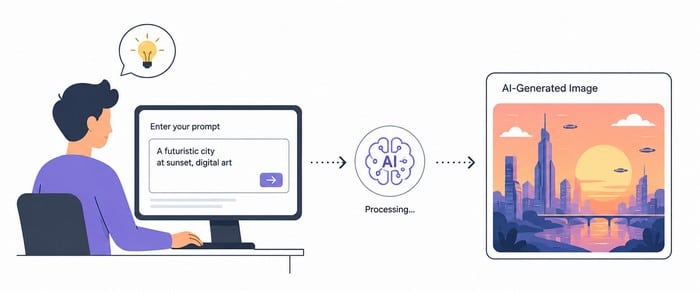
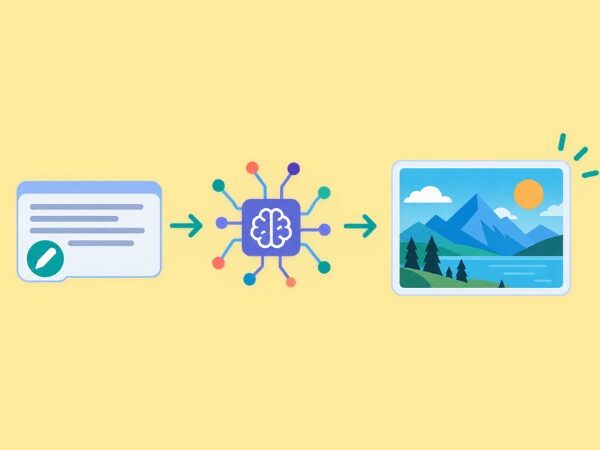
AI-generated art is visual content produced with the help of an artificial intelligence system.
A creator might enter a prompt such as:
“A futuristic city floating above the clouds at sunset, cinematic digital painting.”
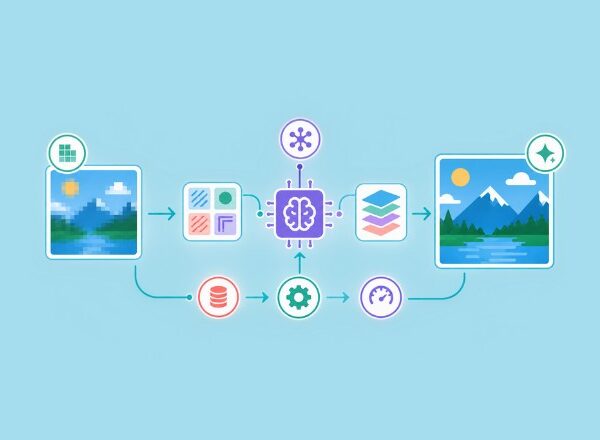
The AI system then generates an image based on its model, instructions, and other technical processes.
Popular generative AI systems can produce everything from illustrations and fantasy artwork to product concepts, advertising images, backgrounds, and realistic photographs.
The technology makes image creation much faster, but speed does not automatically determine copyright ownership.
The key question is not simply who typed the prompt. It is how much human creativity went into the final work.
AI Art Copyright: Is AI-Generated Art Copyrighted?
In the United States, purely AI-generated material generally does not receive copyright protection simply because a person requested it from an AI system.
The U.S. Copyright Office’s January 2025 report explains that copyright protection can apply to AI-assisted outputs when a human determines sufficient expressive elements.
Examples include human-authored material appearing in an AI output or creative human arrangements and modifications. The Office specifically concluded that merely providing prompts is not enough.
This creates an important distinction:
AI-assisted artwork is not necessarily the same thing as purely AI-generated artwork.
For example, imagine two creators.
- Creator A types one prompt into an image generator and publishes the first result without making meaningful creative changes.
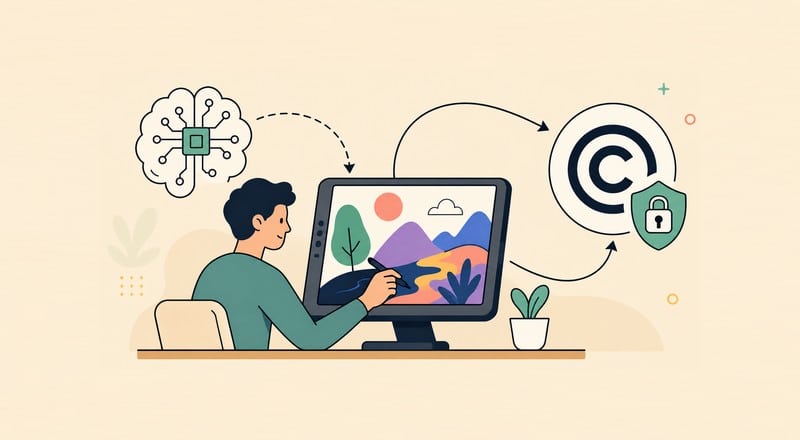
- Creator B generates several images, selects specific elements, edits the composition, paints over portions, adds original characters, changes lighting and colors, and combines the result with original artwork.
The second example contains considerably more human creative involvement.
That human contribution can potentially make portions of the final work eligible for copyright protection.
Why Human Creativity Matters
Human creativity is at the heart of AI art copyright. The more important question is not simply which AI tool generated an image, but how much creative expression came from the human creator.
The U.S. Copyright Office explains that copyright protects original works of authorship created by a human and fixed in a tangible form.
Visual artwork, including illustrations and digital art, can fall within copyright protection when it meets those requirements.
Generative AI complicates this because the machine may determine many of the expressive details.
A creator can describe a desired scene, but the AI may independently determine:
- The exact facial features.
- Brush or rendering characteristics.
- Lighting.
- Background details.
- Object placement.
- Textures.
- Colors.
- Fine artistic details.
That raises the question of who actually made the creative decisions.
Under the current U.S. approach, human creative control remains central to copyrightability.
Does Typing a Detailed Prompt Give You Copyright?
This is one of the biggest misconceptions surrounding AI art.
A very detailed prompt can require creativity, imagination, and considerable effort.
However, the U.S. Copyright Office has stated that prompting an AI system alone does not generally provide sufficient human authorship for copyright protection of the resulting output.
That does not mean prompts are useless.
A detailed prompt can dramatically influence the result. It can also form part of a larger creative workflow involving selection, arrangement, editing, compositing, and other human decisions.
Think of the prompt as one part of the creative process, not as automatically making the person who wrote it the copyright author of every pixel the AI produces.
What Happens When a Human Edits AI Art?
This is where things become much more interesting.
Suppose an AI generator creates a basic image. A designer then takes that image into Photoshop or another editing program and substantially transforms it.
The designer might:
- Change the composition.
- Add original artwork.
- Remove AI-generated elements.
- Paint new details.
- Create original characters.
- Combine several images.
- Add typography and graphic elements.
- Modify lighting and colors.
- Rearrange visual components.
The resulting work may contain protectable human-created material.
The U.S. Copyright Office has specifically said that human modifications, creative arrangements, and human-authored elements incorporated into AI-assisted works can qualify for copyright protection when they contain sufficient human creativity.
This means AI does not necessarily eliminate copyright protection from an entire project.
Instead, the copyright analysis can focus on the human-created portions.
A Useful Example: AI Art vs. AI-Assisted Art
Consider a fictional digital artist creating a fantasy book cover.
Scenario 1: Simple AI generation
The artist enters a prompt, receives an image, downloads it, and publishes it.
The image may contain little or no independently protectable human expression under the U.S. Copyright Office’s current approach.
Scenario 2: AI-assisted creation
The artist generates several concepts, selects one, completely redesigns the composition, paints the main character, creates the typography, adds original background elements, changes the lighting, and combines multiple visual elements.
The final book cover contains significant human creative expression.
In this situation, the human-created aspects may receive copyright protection even though AI was part of the workflow.
The distinction can be subtle, which is why documenting the creative process can be useful.
Can You Sell AI-Generated Art?
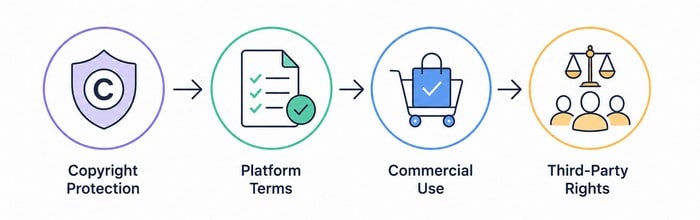
This is another area where creators need to slow down and look beyond copyright.
Copyright ownership and commercial permission are not the same thing.
AI art copyright is only one part of the picture when an AI-generated image is used commercially. Creators also need to consider the terms of the AI platform and other intellectual-property rights.
An AI platform may have its own terms governing how users can use generated content. Those terms can address commercial use, ownership claims, licenses, restrictions, and other rights.
So before selling an AI-generated image, check the current terms of the specific AI service.
This is especially important for businesses using AI-generated images in:
- Advertising.
- Product packaging.
- Websites.
- Social media campaigns.
- Merchandise.
- Books.
- Print products.
- Client projects.
A platform’s terms may change, so checking the current license at the time of use is a smart habit.
Copyright Is Not the Only Legal Issue
AI art can involve more than copyright.
An image might create problems involving trademarks, privacy, publicity rights, contracts, or other intellectual property rules.
For example, imagine generating an image that looks extremely similar to a recognizable celebrity for an advertising campaign.
Even if copyright is not the central issue, other legal concerns could arise.
Similarly, creating an image containing a company’s trademark or branding can raise trademark questions.
This is one reason businesses should not treat an AI-generated image as automatically “free to use.”
AI-generated does not mean legally risk-free.
What About AI Art That Looks Like a Famous Artist?
This is one of the most controversial areas of generative AI.
Users can ask AI systems to create images inspired by particular artistic characteristics. That creates difficult questions about artistic style, copyrighted works, artists’ identities, and unfair competition.
Copyright generally does not protect an abstract artistic style by itself. However, copying specific protected expression can create copyright concerns.
Legal issues may also arise outside copyright, depending on the circumstances and jurisdiction.
For creators, a safer approach is to describe visual characteristics rather than attempting to reproduce a living artist’s specific works.
For example, instead of asking for an exact imitation of a particular artist, a prompt could describe characteristics such as:
“dramatic impressionistic brushwork, soft atmospheric lighting, vibrant landscape colors, and visible textured strokes.”
That approach focuses on visual characteristics rather than requesting a direct imitation of a particular creator.
Can AI Art Be Registered With the U.S. Copyright Office?
Potentially, but the details matter.
The U.S. Copyright Office requires applicants to identify AI-generated material in works submitted for registration. Its guidance explains that applicants should disclose AI-generated content and identify the human-authored portions of a work.
The Office has also made an important distinction between an entire work and individual AI-generated components.
A work can contain AI-generated material and still qualify for copyright protection because of its human-authored components.
One well-known example involved a graphic novel containing human-written text and AI-generated images.
The Copyright Office determined that the human-authored text and the human selection and arrangement of the material could be protected, while the individual AI-generated images themselves were not protected.
That example illustrates the central principle:
A work containing AI does not automatically become uncopyrightable.
What Creators Should Keep Track Of
For anyone creating AI art professionally, keeping records of the creative process is a sensible practice.
Save the original prompts, generated versions, editing files, sketches, source material, and major revisions.
This documentation can help demonstrate how much human involvement went into the final work.
For example, a designer might keep:
Prompt → AI generations → Selected image → Photoshop edits → Original artwork → Final composition
This creates a simple history of the creative process.
It does not automatically guarantee copyright protection, but it can make the human contribution much easier to explain.
AI Art Copyright Around the World
One important warning: there is no single worldwide AI art copyright rule.
Different countries can approach human authorship, AI-generated works, training data, and related rights differently.
The U.S. Copyright Office’s Part 2 report notes that many European Union member states have taken the position that existing copyright principles can address AI outputs and that meaningful human creative input can be important for copyright eligibility.
For international businesses and creators, this matters.
An image created in one country may be used in another country with a different legal framework.
For major commercial projects, obtaining advice from a qualified intellectual-property lawyer in the relevant jurisdiction is the safest approach.
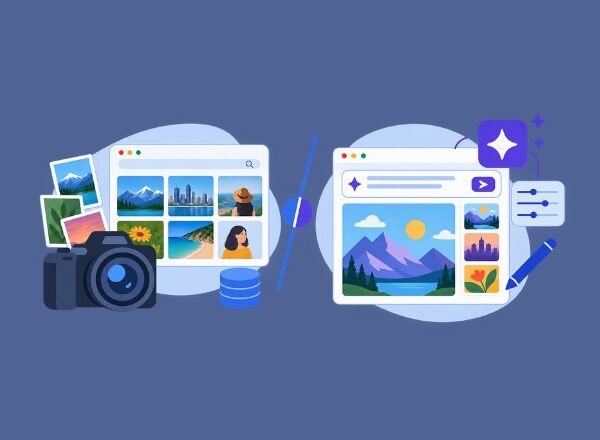
AI Training and Copyright Are Separate Questions
There is another major issue that often gets mixed into the discussion.
How an AI model was trained is a different legal question from whether an AI-generated output is copyrightable.
An AI system may have been trained using huge collections of text, photographs, illustrations, or other material. Questions about whether copyrighted works can legally be used to train AI systems are part of the broader copyright debate.
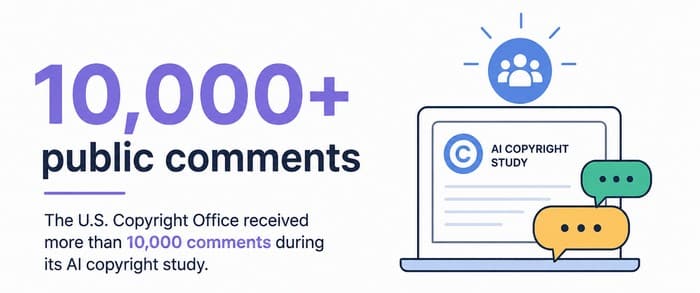
The U.S. Copyright Office has been examining these issues separately. Its AI initiative received more than 10,000 public comments during its study of copyright and artificial intelligence.
The Office’s Part 2 report focuses on the copyrightability of generative AI outputs. A separate part of the broader study addresses issues surrounding AI training and copyrighted works.
How to Use AI Art More Responsibly
AI is an incredibly useful creative tool, but responsible use requires more than generating an attractive image.
Creators should check the AI platform’s current terms, keep records of their process, review images for recognizable people and trademarks, and avoid assuming that every generated image has exclusive copyright protection.
For commercial work, human creative involvement is especially important.
AI can be treated as a creative assistant rather than an automatic copyright owner or replacement for the creator.
That mindset also encourages better results.
Instead of generating one image and immediately publishing it, creators can use AI for brainstorming, concept development, composition ideas, background generation, and experimentation before applying their own creative direction.
A Practical AI Art Copyright Workflow
Generate ideas with AI: Use prompts to explore concepts, compositions, colors, and visual directions.
Select and refine: Choose the strongest result and identify what needs improvement.
Add meaningful human creativity: Edit, draw, paint, compose, arrange, or otherwise transform the work.
Keep the working files: Save prompts, drafts, source material, and editing files.
Check platform licensing: Review the current AI service terms before commercial use.
Check third-party rights: Look for recognizable people, trademarks, copyrighted characters, logos, or other potentially protected material.
Consider registration for important work: For significant commercial projects, investigate copyright registration and obtain professional legal advice when appropriate.
The Future of AI Art Copyright
The legal landscape is still developing.
Generative AI technology is evolving quickly, while copyright law moves much more slowly.
The U.S. Copyright Office has already published its report on the copyrightability of generative AI outputs, but the broader AI copyright discussion continues.
Courts, lawmakers, copyright offices, AI companies, artists, photographers, designers, and technology companies will continue influencing the conversation.
That means today’s answer may not remain unchanged forever.
For creators, the practical lesson is simple: stay informed and pay attention to changes in the countries where the work will be published or sold.
Frequently Asked Questions About AI Art Copyright
Is AI-generated art automatically copyrighted?: No. In the United States, purely AI-generated material is not automatically protected by copyright. Human authorship and creative contribution are important factors.
Can a person copyright an AI-generated image? Potentially, if the person contributes sufficient human creative expression. Human-authored elements, meaningful modifications, and creative arrangements may be protected even when AI-generated material is included.
Does writing a prompt give someone copyright ownership? Not automatically. The U.S. Copyright Office has stated that providing prompts alone does not generally provide sufficient human authorship for copyright protection of the resulting output.
Can AI-generated art be used commercially? Possibly, but creators should check the AI platform’s current terms and consider other legal issues beyond copyright. Commercial permission and copyright ownership are separate questions.
Should AI-generated images be disclosed? For U.S. copyright registration, the Copyright Office requires applicants to disclose AI-generated material in works submitted for registration.
Final Thoughts: AI Is a Tool, Not a Copyright Shortcut
AI art copyright can seem complicated, but the basic idea is easier to understand when human creativity is placed at the center of the discussion.
AI-generated art has made visual creativity more accessible than ever.
For a blogger creating a featured image, a designer developing concepts, or a business producing marketing visuals, generative AI can save enormous amounts of time.
But the phrase “AI-generated” does not automatically answer the copyright question.
The most important factor is the human creator’s role.
A simple AI output with minimal human involvement can differ greatly from a finished artwork that combines AI generation with substantial human editing, original artwork, creative selection, composition, and transformation.
For anyone creating serious commercial work, the best approach is to treat AI as part of the creative workflow, maintain records of the process, check the platform’s licensing terms, and stay informed about copyright developments.
The technology is moving quickly. Copyright law is trying to keep up.
And for digital creators, understanding that difference could become just as important as knowing how to create the image in the first place.