Have you ever looked at an advertisement and felt drawn to it before you even read the words?
Perhaps it was a beautiful photograph, an interesting color combination, or an image that reminded you of something familiar. That reaction is no accident. Images can influence how people feel, what they remember, and even the decisions they make.
Today, visual content is everywhere. From social media images and website banners to online ads and product pages, images play a key role in how businesses communicate with their audiences.
A well-chosen image can capture attention, create an emotional connection, and make a marketing message easier to understand.
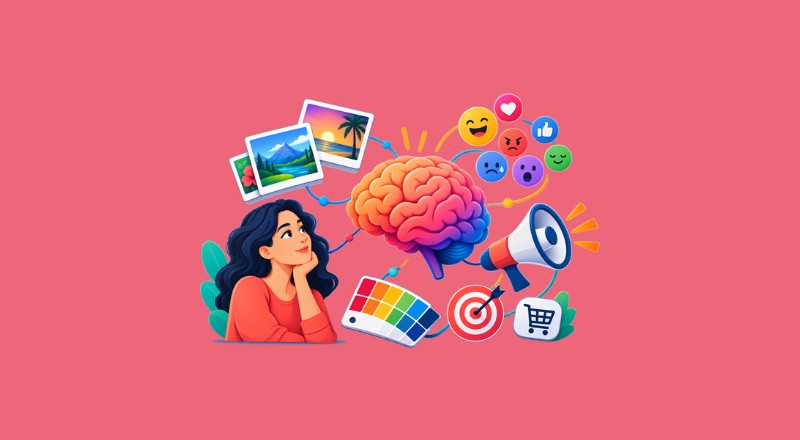
This is where the psychology of images becomes especially interesting. It explores how people respond to visual information and how elements such as color, facial expressions, composition, and visual storytelling shape their impressions.
For marketers, understanding these reactions can make a real difference. Instead of choosing pictures simply because they look attractive, businesses can use visual psychology to create content with a clear purpose.
In our guide, we explore how images influence human behavior and share practical ways to use visual content to make your marketing more persuasive.
What Is the Psychology of Images?
The psychology of images is the study of how people perceive, interpret, and respond to visual information. It looks at the connection between what we see and how we think, feel, remember, and behave.
Our brains constantly process visual information. An image can communicate an idea, suggest a feeling, or create an impression without requiring a long explanation. This makes visual communication a valuable part of marketing.
Think about an advertisement for a travel company. A photograph of a beautiful beach, clear blue water, and warm sunshine can create feelings of relaxation and excitement. The viewer may begin imagining a holiday before reading a single word about the offer.
The same principle applies to many industries. A photograph of a happy family can communicate comfort and security. A close-up product image can highlight quality and detail. A picture of a friendly team can make a business feel more approachable.
Research into visual information processing also shows how visual features, including color, shape, and composition, influence the way people interpret marketing messages.
The important lesson: An effective marketing image does more than decorate a page. It helps communicate a message and creates an experience for the viewer.
Why Images Have Such a Strong Influence on Human Behavior
People often form an impression of something before they have time to examine all the details. Visual information can help them understand a message quickly, especially when the image is relevant to the subject.
This is one reason images are so useful in advertising and digital marketing. They can communicate information, attract attention, and give people an emotional reason to explore a product or service.
Images Capture Attention
Online audiences are constantly exposed to information. Social media feeds, websites, advertisements, videos, and digital art compete for attention every day.
A relevant and visually appealing image can help a message stand out. However, a colorful picture alone isn’t enough. The image should connect with the subject and give viewers a reason to stop and look.
For example, a marketing campaign promoting a new camera could use a detailed photograph showing the camera capturing a beautiful landscape. The image immediately communicates what the product can do.
The more closely the visual connects with the message, the more useful it becomes.
Images Create Emotional Connections
Emotions play an important role in how people respond to marketing. A picture can create feelings of happiness, excitement, comfort, trust, or curiosity.
Imagine two advertisements for the same coffee brand. One shows only a cup of coffee on a plain table. The other shows two friends enjoying coffee together in a warm and welcoming café.
Both images present the product, but the second also communicates an experience. It connects the coffee with friendship, relaxation, and enjoyable moments.
This emotional connection can make a brand more memorable and help people develop a positive impression.
Images Help People Remember Messages
Visual content can also support memory. When an image is closely connected to a message, it gives the viewer another way to understand and recall the information.
This is particularly useful for brands that want to communicate complicated ideas in a simple way.
For example, an infographic explaining an image optimization process can turn several technical steps into an easy-to-follow visual. Instead of reading a long explanation, visitors can quickly understand the main stages.
For marketers, the goal is to create visuals that support the message rather than distract from it.
The Role of Colors in the Psychology of Images

Color is one of the most noticeable elements in marketing imagery. Different colors can create different associations and influence the overall mood of a design.
However, color psychology is not a collection of universal rules. People’s reactions can depend on personal experiences, cultural backgrounds, context, and the way colors are combined.
Understanding common color associations can still help businesses make more thoughtful design decisions.
Red: Energy and Urgency: Red is often associated with excitement, passion, energy, and urgency. It is frequently used in promotional graphics, special offers, and call-to-action elements.
A red discount label, for example, can help an offer stand out. However, using too much red can make a design feel overwhelming.
Blue: Trust and Professionalism: Blue is commonly associated with reliability, calmness, and professionalism.
It is a popular choice among technology companies, financial services, and businesses that want to communicate stability. A clean blue color scheme can also make a website feel organized and professional.
Yellow: Optimism and Attention: Yellow is often connected with happiness, warmth, and positivity. It can help create a cheerful atmosphere and draw attention to important details.
Because bright yellow can be difficult to read when used incorrectly, it works best when balanced with darker colors.
Green: Nature and Balance: Green is commonly associated with nature, growth, health, and balance.
It is often used by brands working in areas such as sustainability, gardening, organic products, and wellness.
Black: Elegance and Sophistication: Black can communicate luxury, confidence, and sophistication. It is often used in premium product advertising, fashion campaigns, and minimalist designs.
The best approach is to choose colors that match the brand’s personality and the message behind the campaign. Consistency also helps create a recognizable visual identity.
How Facial Expressions and Human Emotions Influence Marketing
People naturally pay attention to other people’s faces. Facial expressions can communicate emotions quickly and help viewers understand the mood of an image.
This makes photographs of people particularly useful in marketing.
A smiling person can create a welcoming impression. A surprised expression can encourage curiosity. A focused expression can communicate concentration, determination, or professionalism.
For example, a company selling skincare products might use a photograph of a person with healthy-looking skin and a natural smile. This can help communicate the experience the brand wants customers to associate with its products.
However, authenticity matters. Images that look overly staged or artificial can weaken the connection between a brand and its audience.
Try to use photographs that feel natural and reflect the people your business wants to reach. Realistic expressions, believable situations, and diverse representation can make marketing visuals feel more relatable.
Visual Storytelling: Make Your Marketing More Persuasive

One of the most effective ways to use the psychology of images is through visual storytelling.
Instead of showing a product without context, tell a small story that helps people understand how it fits into their lives.
Think about an advertisement for a fitness brand.
A photograph of running shoes on a white background shows the product. A photograph of someone running along a beautiful coastal path tells a larger story about movement, freedom, health, and personal achievement.
The second image gives viewers something to imagine.
Visual storytelling works because it connects products and services with experiences, emotions, and everyday situations. It can also help a business communicate its values and personality.
To create stronger visuals and stories:
- Show people using a product or enjoying a service.
- Choose settings that reflect your target audience’s interests.
- Use images that communicate a clear emotion or idea.
- Keep the visual message simple and easy to understand.
- Make sure the story supports your brand identity.
A good marketing image should give viewers a reason to connect with the message, not just something attractive to look at.
Composition and Image Placement Matter
Another important factor is image optimization. Even a beautiful photograph can lose its impact if the composition is confusing. The way objects, people, colors, and empty spaces are arranged can influence how viewers explore an image.
A strong composition guides the eye toward the most important part of the visual.
For example, an advertisement for a new smartphone should make the phone the main focus. Too many decorative objects or distracting background details can take attention away from the product.
White space, also known as negative space, is another useful design element. It gives important objects room to stand out and makes a visual feel less crowded.
Image placement is equally important on websites and landing pages. A relevant image placed close to its supporting text can help visitors understand the message. A large decorative photograph that adds no useful information may simply take up valuable space.
Research from Nielsen Norman Group highlights an important distinction: visitors tend to pay more attention to images that provide meaningful information, such as product photographs and pictures of real people, than to purely decorative images.
For businesses, this means every visual should have a reason for being there.
How to Choose the Right Images for Your Target Audience
An image that works well for one audience may not have the same effect on another. Understanding your target audience is therefore an important part of visual marketing.
Consider a business selling outdoor equipment. Its customers may respond well to images showing people hiking, exploring nature, or enjoying outdoor activities.
A company offering professional accounting services needs a different visual approach. Clean office photography, approachable professionals, and simple graphics may communicate its message more effectively.
Before selecting an image, consider a few important questions:
- Who is the intended audience?
- What feeling should the image create?
- What message should viewers understand?
- Does the visual match the brand’s identity?
- Is the image relevant to the product or service?
The more closely your images reflect your audience’s interests and expectations, the easier it becomes to create a meaningful connection.
Authentic Images Build Trust
Trust is an important part of every successful marketing strategy. People want to feel confident in the businesses they interact with, particularly when spending money online.
Visuals can contribute to that confidence.
Original photographs, genuine customer experiences, realistic product images, and authentic team pictures can help a brand feel more transparent and approachable.
On the other hand, generic stock photography that looks staged may make a business feel less personal.
This does not mean images from Stock photo websites should never be used. They can be helpful when original photography is unavailable. The key is to select visuals that fit the brand and feel believable.
The Stanford Web Credibility Project identifies professional visual design as an important factor in how visitors evaluate website credibility. Its guidelines also recommend showing real people behind an organization and communicating expertise clearly.
For smaller businesses, this is a useful reminder: professional-looking marketing does not have to be complicated. Honest, relevant, and well-presented images can make a strong impression.
Common Visual Marketing Mistakes to Avoid
Understanding the psychology of images is only useful when you apply it correctly. Some common mistakes can reduce the impact of otherwise good marketing content.
Using Images That Have No Clear Purpose: Adding pictures simply to fill space does not improve a marketing message. Every image should support the content, explain an idea, or create a useful emotional connection.
Choosing Quality Over Relevance: A high-resolution photograph may look impressive, but it will not necessarily connect with your audience. A relevant image is often more valuable than a beautiful image that has nothing to do with the message.
Overloading Images With Too Many Elements: Too many colors, icons, objects, and decorative details can make a visual difficult to understand. Keep the design focused on one main idea.
Using Inconsistent Visual Styles: Mixing unrelated photography styles, colors, and graphic designs can make a brand look unorganized. A consistent visual identity helps customers recognize your business across different platforms.
Ignoring Mobile Users: Many people discover brands and products through their mobile devices. Images should look clear and balanced on smaller screens. Avoid designs that rely on tiny details or text that becomes difficult to read.
How to Use Psychology of Images Across Different Marketing Channels
The psychology of images can support many types of digital marketing. However, the best visual approach depends on the platform and the purpose of the content.
Website and landing pages: Good image optimization helps maintain visual quality while reducing unnecessary file sizes. This is particularly important for mobile visitors, who expect websites to load quickly and display content clearly.
Social media: Choose eye-catching images that communicate one clear idea. Use consistent colors and visual styles to make your posts recognizable.
Email marketing: Include relevant images that support the main message. A product photograph or a simple promotional graphic can make an email more engaging without overwhelming the reader.
Online advertising: Match the image to the audience and campaign objective. Make sure the main visual and advertising message work together.
E-commerce: Use clear product photographs from different angles. Show useful details and, when appropriate, demonstrate products in real-life settings.
The most effective strategy is to adapt your visuals to each platform while maintaining a consistent brand identity.
Measure the Impact of Your Marketing Images

Choosing images based on psychology is a good starting point, but testing their actual performance is just as important.
Different audiences may respond differently to the same visual. That is why it is useful to compare images and monitor results rather than relying entirely on assumptions.
For example, you could test two versions of an advertisement. One might feature a product on a plain background, while the other shows someone using it in a real-life situation.
Compare relevant performance indicators, such as:
- Click-through rate (CTR).
- Conversion rate.
- Engagement and social interactions.
- Time spent on a landing page.
- Product page interactions.
A/B testing can help identify which image performs better for a particular audience and campaign.
You can also use tools such as Google Analytics to understand website engagement and Google Search Console to monitor organic search performance.
Remember that an image with many likes is not automatically the most effective marketing image. The real goal is to understand how well your visuals support your business objectives.
Final Thoughts: Use the Psychology of Images to Create Better Marketing
Images are much more than decorative elements. They can capture attention, communicate emotions, support memory, build trust, and help people understand a brand’s message.
Understanding the psychology of images gives marketers a better foundation for choosing and creating better content. By considering colors, facial expressions, storytelling, composition, authenticity, and audience preferences, businesses can make more thoughtful marketing decisions.
The most effective visuals are not necessarily the most complicated or expensive ones. They are the images that communicate the right message to the right people at the right time.
Start by looking at the images you already use in your marketing. Do they support your message? Do they reflect your brand? Do they create the kind of impression you want customers to remember?
Small improvements can make a meaningful difference.
Remember that great visual marketing also depends on technical details. Combining thoughtful image selection with effective image optimization can improve website performance, support a better user experience, and help your visual content contribute to stronger SEO results.
When you combine attractive design with a clear purpose and a good understanding of human behavior, you can make your marketing more persuasive and create visual experiences that people remember.