Artificial intelligence is changing the way we create and experience visual content. Not long ago, producing professional images, illustrations, and videos required expensive software, creative skills, and hours of work.
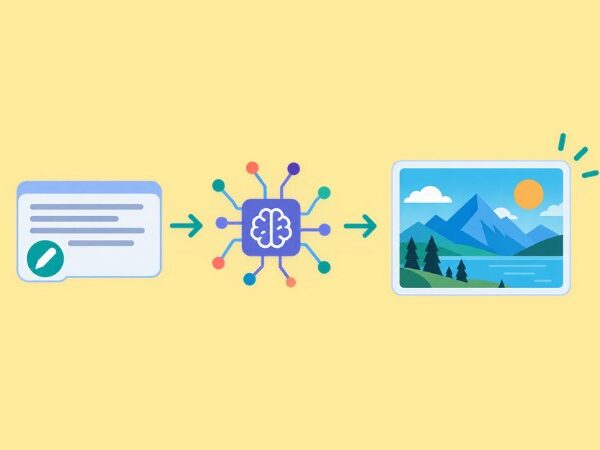
Today, AI tools can turn a simple text description into a detailed image or transform a still photograph into a moving video in just a few minutes.
And this is only the beginning.
The development of AI-powered visual content is moving quickly. Image generators are becoming more advanced, video creation is becoming more accessible, and businesses are finding new ways to use AI to connect with their audiences.
What once seemed like something from a science fiction movie is becoming part of everyday content creation.
But what comes next?
Over the coming years, AI will likely change much more than the way images are generated. It could transform digital marketing, social media, website design, advertising, online shopping, and visual storytelling.
Creators will have more opportunities to experiment, while businesses will be able to produce visual experiences that were previously too expensive or complicated.
In our article, we explore seven revolutionary trends that could shape the future of AI-powered visual content.
Furthermore, we share predictions about how these developments may influence content creators, marketers, designers, and businesses.
Let us take a closer look at what lies ahead.
Why AI-Powered Visual Content Is Becoming So Important
Visual content has always played an important role in digital communication. A strong image can attract attention, explain an idea, and help people remember a message. Videos, illustrations, and graphics also make websites and social media posts more interesting and engaging.
However, producing enough high-quality visual material has traditionally been a challenge.
Businesses need images for websites, advertisements, newsletters, product pages, and social media platforms. Content creators face similar demands. They must regularly publish fresh material while maintaining a consistent visual style.
AI is beginning to make this process easier.
Modern AI tools can generate images from written descriptions, remove unwanted objects, improve photographs, create illustrations, and produce short video clips. Some tools can even combine several creative steps into one workflow.
According to Adobe’s 2026 AI and Digital Trends report, businesses are increasingly looking at AI as a way to improve their entire content production process, from planning and creation to distribution and measurement.
This development suggests that AI is becoming more than a convenient creative tool. It is gradually becoming part of the infrastructure behind modern digital content.
Here are seven trends that could define the next chapter of visual content creation.
7 AI-Powered Visual Content Trends to Watch
AI Image Generation Will Become More Realistic and Creative
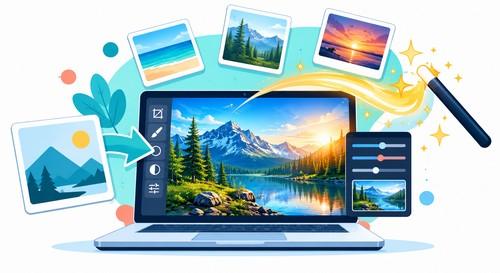
AI image generation has already made impressive progress. Users can describe a scene, choose an artistic style, and generate an image without needing traditional drawing or photography skills.
But the next generation of image generators is likely to offer much greater control.
Instead of simply producing an image based on a prompt, future systems could allow users to control individual objects, lighting, camera angles, facial expressions, backgrounds, and small visual details with greater accuracy.
Imagine creating a product photograph by describing the scene in a few sentences. You could then ask the AI to change the background, adjust the lighting, move an object, or create a completely different composition without starting again.
This could make professional-looking visual content available to a much wider audience.
Another important development will be improved consistency.
One of the challenges with current AI image generation is producing several images that share the same characters, objects, or visual identity. Future systems are likely to become better at maintaining these details across entire projects.
For businesses, this could make it easier to produce matching product images, advertising graphics, and branded illustrations.
Our prediction: Within the next few years, AI image generation will move beyond creating individual pictures. It will become a more complete creative environment where users can build, edit, and manage entire collections of visual assets.
For bloggers and website owners, this could mean faster production of original illustrations that match the subject and design of each article.
AI Video Generation Will Transform Content Creation
Video is becoming one of the most important formats in digital marketing and online communication. However, traditional video production can be expensive and time-consuming.
AI video generation is beginning to change that.
Tools such as Google’s Veo can generate video from text and images, while newer systems offer more control over scenes, movement, and sound. This allows creators to experiment with video production without needing a complete filming setup.
Google has also introduced improvements to Veo 3.1 that support image-based video creation, more expressive movement, and vertical video formats designed for mobile platforms.
The next step could be even more exciting.
Imagine turning a blog post into a short video automatically. An AI system could identify the main ideas, create suitable scenes, generate narration, add background music, and produce several versions for different social media platforms.
A single article could become a complete collection of visual content.
Video creation could also become more interactive. Creators might be able to change camera angles, replace objects, extend scenes, or adjust the mood of a video simply by describing the changes they want.
Our prediction: AI-generated videos will become a standard part of everyday content marketing. Short promotional videos, product demonstrations, educational clips, and social media content will become much easier and faster to produce.
This does not mean traditional filmmaking will disappear. Instead, AI will give creators another way to bring their ideas to life.
Personalized Visual Content Will Reach a New Level

Personalization is already an important part of digital marketing. Websites recommend products based on browsing activity, and advertising platforms use audience information to deliver more relevant messages.
The next development could bring this personalization directly into visual content.
Imagine visiting an online store and seeing product images presented in a setting that reflects your preferences. A clothing company might show the same product in different environments, colors, or styles based on the interests of different customer groups.
AI could make these variations much easier to produce.
Businesses may also create localized visual campaigns for different countries and cultures. Instead of using the same advertising image everywhere, they could generate variations that reflect local surroundings, languages, seasonal events, and cultural preferences.
This could make marketing feel more relevant and personal.
For smaller companies, the benefits could be significant. They may gain access to creative options that previously required large marketing teams and substantial production budgets.
However, personalization needs to be handled carefully. Businesses should respect customer privacy, use appropriate data, and avoid making assumptions based on sensitive personal information.
Our prediction: Personalized AI-powered visual content will become an increasingly important marketing strategy. Instead of producing one image for everyone, companies will create flexible visual campaigns with variations designed for different audiences and situations.
AI Will Create More Consistent Brand Identities
Building a recognizable brand takes time. Companies need consistent colors, typography, photography styles, illustrations, and visual messages across their websites, advertisements, and social media channels.
Maintaining that consistency can be difficult, especially when several people work on the same content.
AI could help solve this problem.
Future creative platforms may allow businesses to establish a complete visual identity inside an AI system. This could include brand colors, preferred image styles, logo placement rules, typography, product photography guidelines, and approved visual elements.
Once these settings are established, the system could use them when generating new images and marketing materials.
For example, a company could request ten social media graphics for an upcoming campaign. The AI would generate different designs while following the same visual guidelines.
The result would be a more consistent appearance across different platforms.
Another interesting possibility is the development of reusable digital characters and brand mascots. Businesses could create recognizable AI-generated personalities that appear in advertisements, educational videos, and social media campaigns.
This could make visual storytelling more recognizable and engaging.
Of course, human review will remain important. AI-generated designs should still be checked for accuracy, quality, and alignment with the brand.
Our prediction: AI-powered brand assistants will become a common feature in creative software. They will help businesses maintain a recognizable visual identity while producing content more efficiently.
Interactive 3D Visuals and Immersive Experiences Will Grow

Traditional images and videos show people what something looks like. Interactive visual experiences allow them to explore it.
This is where AI, 3D technology, and augmented reality could come together.
Imagine shopping online and being able to rotate a product, change its colors, examine its details, and see how it might look in your home.
Instead of relying on a few static photographs, customers could explore a digital version of the product.
AI could make producing these experiences faster and more affordable by helping generate 3D objects, environments, textures, and realistic lighting.
The same technology could have applications in education, architecture, tourism, and entertainment.
A teacher could create an interactive model of the solar system. An architect could show clients a realistic representation of a future building. A travel company could offer virtual experiences of destinations before customers make a booking.
These are examples of how visual content could become more than something people simply watch or look at.
It could become something they actively explore.
Our prediction: In the coming years, AI-assisted 3D creation and interactive visuals will become more accessible to smaller businesses and independent creators. We may see more websites combining traditional images with interactive product previews and immersive digital experiences.
AI Will Make Visual Content More Accessible and Easier to Localize
Creating visual content for a global audience presents several challenges.
An image that works well in one market might not communicate the same message in another. Different audiences have different cultural references, languages, expectations, and visual preferences.
AI could make localization much easier.
Future systems may be able to adapt images, illustrations, advertisements, and videos for different regions while preserving the original message and brand identity.
For example, a business could create one advertising campaign and generate localized versions with suitable backgrounds, product presentations, and language-specific text.
Accessibility could also improve.
AI tools may help creators generate descriptive image text, create captions for videos, produce alternative visual formats, and simplify complex graphics.
This could help more people understand and interact with online content.
For website owners, better image descriptions and accessible visual design can also support a stronger user experience.
However, automatically generated descriptions should always be reviewed. An incorrect image description can confuse visitors and provide misleading information.
Our prediction: AI-powered localization and accessibility features will become standard parts of creative platforms. Producing visual content for several languages and audiences will require less manual work, making international content creation more accessible to smaller organizations.
Authenticity, Copyright, and Trust Will Become More Important

As AI-generated images and videos become more realistic, an important question will become increasingly difficult to ignore:
How can people know what they are looking at?
AI can create convincing photographs of people, places, and events that never existed. This opens exciting creative possibilities, but it also creates challenges involving misinformation, copyright, licences and trust.
Businesses will need to think carefully about how they use generated visuals, and choosing visuals especially in advertising and journalism.
Copyright and ownership will also remain important topics. Creators need to understand the terms of the tools they use, the permissions attached to their source material, and the rules that apply to commercial use.
One promising development is the growing interest in digital content provenance.
The Coalition for Content Provenance and Authenticity (C2PA) is developing technical standards that help establish the origin and history of digital content.
These standards can support information about how an image or video was created or edited. They do not automatically guarantee that content is truthful, but they can provide useful transparency.
For professional creators, this could become an important part of responsible AI workflows.
Human creativity will also remain essential. AI can generate impressive visuals, but people still provide the ideas, emotions, context, and judgment that make content meaningful.
Our prediction: Trust and transparency will become major competitive advantages. Businesses that use AI responsibly, review their visual content, and communicate clearly with their audiences will be better positioned to build lasting relationships.
How Businesses and Content Creators Can Prepare for the Future
The future of AI-powered visual content offers exciting opportunities, but there is no reason to wait for the next generation of tools before getting started.
Creators and businesses can begin adapting their workflows today.
The first step is to experiment with different AI image and video generators. Try creating illustrations, product images, social media graphics, and short videos. Learning how prompts work will help you understand the possibilities and limitations of each platform.
It is also important to develop a recognizable visual style. AI makes it easier to produce large amounts of content, but quantity alone does not create a strong brand. Consistent colors, compositions, and visual themes help audiences recognize your work.
Another useful step is to combine AI with human editing. Generated images may contain incorrect details, unnatural elements, or visual inconsistencies. Reviewing and refining the results can make a significant difference.
Finally, think beyond individual images. A single blog post can inspire several social media graphics, a short video, an infographic, and a newsletter illustration. Planning these assets together can help you get more value from every piece of content.
Final Thoughts: The Future of Visual Creativity Is Human and AI-Powered
The future of AI-powered visual content will bring significant changes to the creative world.
More realistic image generation, faster video production, personalized advertising, consistent brand identities, interactive 3D experiences, improved accessibility, and stronger content transparency are all developments worth watching.
Some of these changes are already happening. Others are predictions about how current technologies may develop over the next few years.
One thing is clear: creating professional visual content is becoming more accessible.
For bloggers, marketers, designers, and businesses, this creates opportunities to experiment with new formats and communicate ideas in more interesting ways.
But technology alone will not make content successful.
The strongest results will come from combining AI’s speed and creative possibilities with human imagination, experience, and storytelling.
AI can help create the image, but people still decide what the image should communicate and why it matters.
And perhaps that is the most exciting part of the future: more people will have the tools to turn their creative ideas into reality.
FAQ About AI-Powered Visual Content
What is AI-powered visual content? AI-powered visual content refers to images, illustrations, videos, graphics, and other visual materials created or enhanced with artificial intelligence.
These tools can generate new visuals from text prompts, edit existing images, animate photographs, and help automate creative workflows.
How will AI change visual content creation? AI will make visual content creation faster and more accessible. It will help creators generate images and videos, personalize marketing materials, maintain brand consistency, and produce content for different platforms and audiences.
Will AI replace graphic designers and content creators? AI is more likely to change creative jobs than eliminate the need for human creativity.
Designers and content creators can use AI to speed up repetitive tasks and explore new ideas. Human judgment, artistic direction, and storytelling will remain valuable.
What are the biggest future trends in AI visual content? Some of the most important trends include realistic AI image generation, AI video production, personalized visuals, automated brand design, interactive 3D experiences, AI-powered localization, and improved transparency around generated content.
Is AI-generated visual content good for SEO? AI-generated images can support SEO when they are relevant, useful, properly optimized, and add value to a page.
Website owners should use descriptive file names, meaningful ALT text, suitable image formats, and compressed files. Original and relevant visuals can also improve the reader experience.